Weaverville's story
Weaverville sits in the homeland of the Wintu people, who lived in this part of the Trinity River country for thousands of years before outsiders arrived. Gold found on the Trinity River in 1848 brought a rush of miners, and by 1850 a camp named for prospector John Weaver had grown into the seat of newly created Trinity County. Repeated fires in the 1850s pushed merchants to rebuild Main Street in brick, and many of those buildings, with their signature outdoor spiral staircases, still stand in a district listed on the National Register of Historic Places in 1971. Thousands of Chinese miners and merchants also shaped the town, and their 1874 temple, the Weaverville Joss House, is now a state historic park and still a place of worship. After mining faded, timber, public lands, Trinity Lake and the Trinity Alps carried the community into the modern era.
Chapters
- 1First Peoples: The Wintu and the Nor-Rel-Muk NationLong before the Gold Rush, this valley belonged to the Wintu.
- 2Gold on the Trinity: Pierson B. Reading and the Founding of WeavervillePierson B. Reading had trapped in this country before the Gold Rush and named the Trinity River in 1845.
- 3The Chinese Community and the Weaverville Joss HouseNews of California gold reached China in 1848, and many people from Guangdong province came to the Trinity mines.
- 4Main Street: Brick, Iron and Spiral StaircasesEarly Weaverville was built of wood and canvas, and it burned again and again.
- 5The Trinity County CourthouseTrinity County's first courthouse and jail went up in 1853 on the hill at the head of Court Street.
- 6Hydraulic Mining and the La Grange MineOnce the easy gold in the streams was gone, miners turned to water power.
- 7J.J. "Jake" Jackson Memorial Museum and Hal Goodyear History ParkThe Trinity County Historical Society was founded in 1954.
- 8The 20th Century: Forests, Timber, Trinity Lake and the AlpsAs mining wound down, the surrounding forests became the region's economic base.
- 9Highland Art CenterThe Highland Art Center was founded in 1968 to promote local and regional artists and artisans.
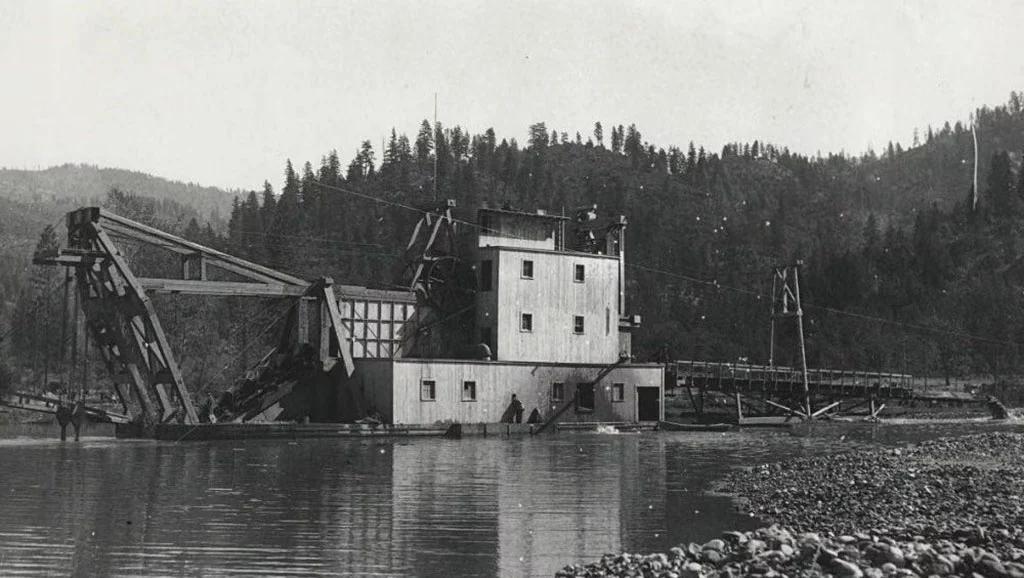
The timeline
30 dated moments, from the first strike to today.
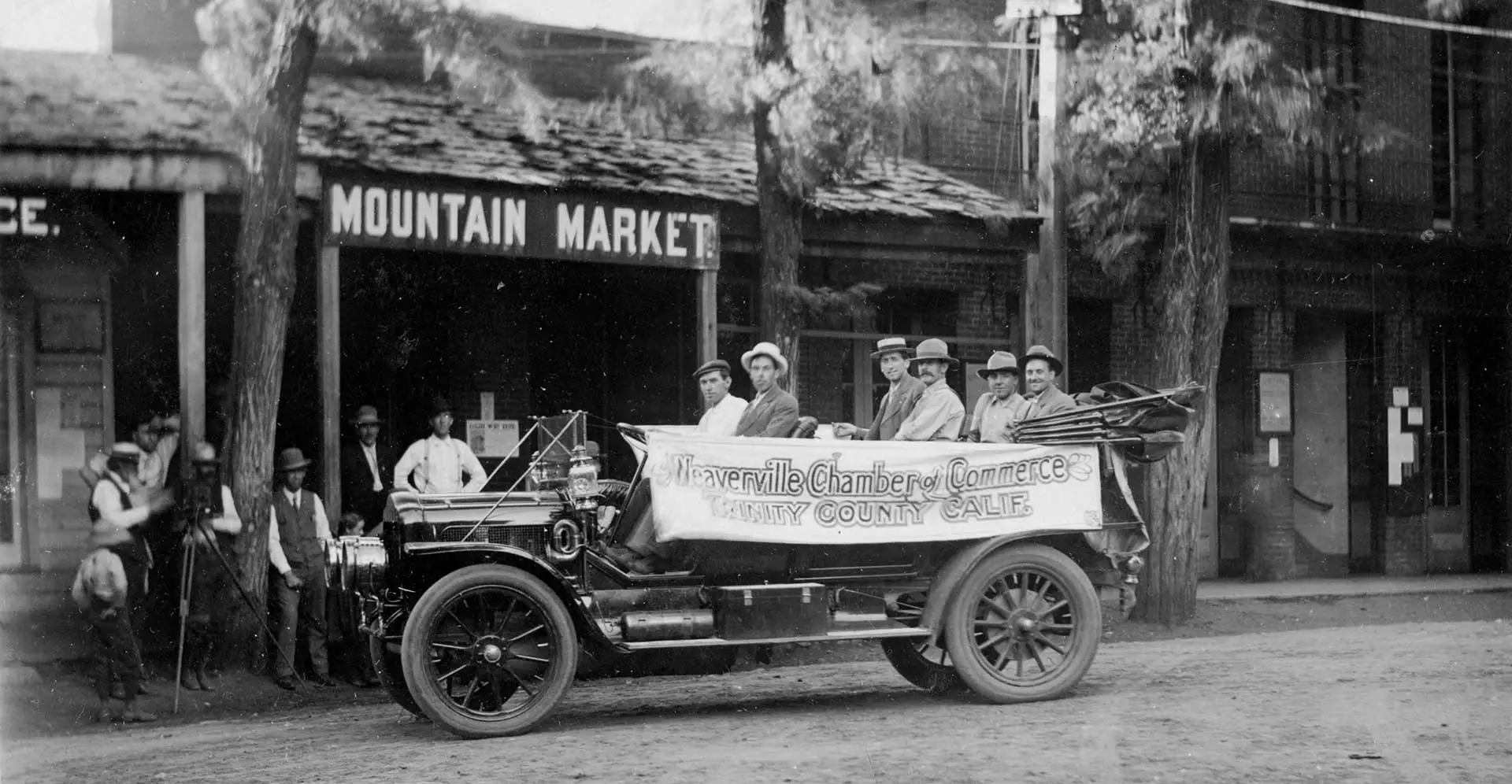
Main Street walking tour
10 stops along the historic district.
Historic sites to visit
Weaverville Joss House State Historic Park630 Main Street, Weaverville, CA 96093
The 1874 Taoist temple Won Lim Miao, the Temple of the Forest Beneath the Clouds, is the oldest Chinese temple in California still in continuous use. Guided tours show the carved altars and furnishings, and the grounds explain the town's Chinese history. Lion Dance celebrations take place at Chinese New Year and over the Fourth of July weekend.
State Parks literature lists temple tours on the hour from 10 a.m. to 4 p.m., with a small fee. Days of operation vary, so call (530) 623-5284 and check before visiting.
J.J. "Jake" Jackson Memorial Museum and Hal Goodyear History Park780 Main Street, Weaverville, CA 96093
This is the Trinity County Historical Society's museum, with the original jail section, mining and Chinese artifacts, and rotating exhibits. Outside are a working blacksmith and tin shop, a La Grange Mine ditch tender's cabin, and the steam-powered Paymaster stamp mill, which runs during special events.
The museum website lists Wednesday through Saturday, 11 a.m. to 4 p.m., with seasonal changes. The history park is open in daylight year-round. Check before visiting.
Weaverville Historic District (Main Street)Main Street, Weaverville, CA 96093
Both sides of Main Street hold brick buildings from the 1850s, many with iron shutters and outdoor spiral staircases. The district has been on the National Register of Historic Places since 1971.
Trinity County CourthouseMain Street at Court Street, Weaverville, CA 96093
This brick building began as a hotel, store and saloon in the mid-1850s. The county bought it in 1865, and it has been the courthouse ever since. The Superior Court calls it the second oldest courthouse still in use in California.
This is a working courthouse. Interior access follows court hours, so check before visiting.
Highland Art Center691 Main Street, Weaverville, CA 96093
This community arts center was founded in 1968. Its gallery is in a Victorian house within the historic district, and the grounds include gardens and artist studios. Monthly exhibitions open on the first Saturday.
The center's website lists Wednesday through Sunday, 11 a.m. to 5 p.m. Check before visiting.
Old Weaverville Fire Station and Chinatown Site615-625 Main Street, Weaverville, CA 96093
Chinese settlers built this rammed-earth structure. It served as the town fire station from 1910 to 1949 and now stands under a protective shelter. Nearby markers note the center of the old Chinatown business district, which burned in 1874 and 1905.
I.O.O.F. Hall and Spiral Staircase520 Main Street, Weaverville, CA 96093
This 1850s brick building has one of Weaverville's signature outdoor spiral staircases. The upper floor's owner first built a staircase here in 1860, and the Odd Fellows later bought that floor.
Weaverville Drug Store515 Main Street, Weaverville, CA 96093
This Main Street drugstore dates to the Gold Rush. A marker at the site gives 1853 as its founding year, and the National Register nomination notes the Anderson Building had served as a drug store since 1855.
Chinese Tong War MarkerTrinity Lakes Boulevard (Highway 3), east of Weaverville Elementary School, Weaverville, CA 96093
This roadside marker stands near the site of the 1854 battle between rival Chinese groups. Accounts of the number of people involved and the death toll vary widely.
La Grange Mine (California Historical Landmark No. 778)State Highway 299, about 4 miles west of Weaverville
This was once the largest hydraulic gold mine in the area. More than 100 million cubic yards of gravel were washed from Oregon Mountain here. A landmark plaque stands along Highway 299, and the scarred slopes are visible from the road.
Reading's Bar Marker, Douglas CityBLM Douglas City Campground, off Steiner Flat Road, Douglas City, CA
A marker in the Douglas City campground identifies where Pierson B. Reading found gold on the Trinity River in July 1848. That strike opened the Trinity country to the Gold Rush.
Hayfork Natural Bridge (Kok Chee Shuhp Chee)Off Wildwood Road, southeast of Hayfork, Shasta-Trinity National Forest
This limestone natural bridge on the Hayfork Ranger District has a picnic area and an interpretive trail. It is sacred to the Wintu and was the site of the 1852 Bridge Gulch Massacre. Visitors are asked to leave the site undisturbed.
Weaverville Cemetery, Old SectionCemetery Drive, north of Oregon Drive, Weaverville, CA 96093
A marker here honors the Gold Rush newcomers buried in the cemetery's oldest section, many of whose grave markers have worn away.